ADAS Calibration After Windshield Replacement: What Bend Drivers Need to Know
A comprehensive guide to everything you need to know about ADAS calibration - the calibration process and how the technology works
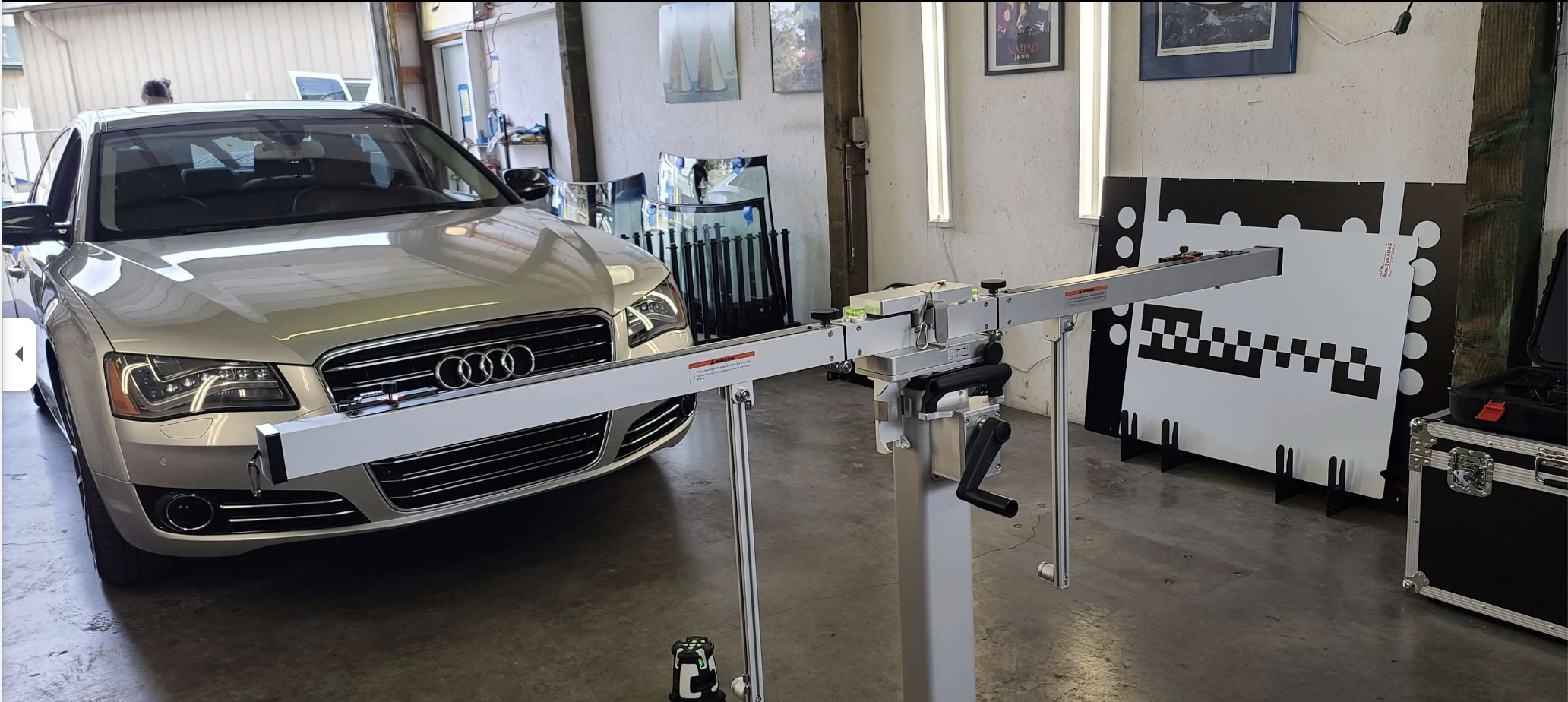
You just had your windshield replaced in Bend, and the shop hands you your keys with a warning: "Don't use your lane-keeping assist until we calibrate it." What does that mean, and why does it matter?
If you own a vehicle manufactured in 2018 or later, there's a good chance your windshield is more than just a piece of glass—it's a critical component of your car's safety systems. Modern windshields house cameras and sensors that power Advanced Driver-Assistance Systems (ADAS), the technology that helps prevent accidents through features like lane departure warnings and automatic emergency braking.
Here's what many Bend drivers don't realize: replacing your windshield without properly calibrating these systems is like replacing your brakes without adjusting them. The parts are there, but they won't work correctly when you need them most. And on Central Oregon's mountain roads and winter conditions, properly functioning safety systems aren't just nice to have—they're essential.
In this comprehensive guide, we'll explain everything you need to know about ADAS calibration after windshield replacement, from how the technology works to what the process involves, and why it's a critical step you can't afford to skip.
What is ADAS? Understanding Advanced Driver-Assistance Systems
Advanced Driver-Assistance Systems (ADAS) represent some of the most significant safety innovations in automotive history. As of 2024, over 90% of new vehicles sold include some form of ADAS technology, and if you're driving a vehicle manufactured in the last few years, you're almost certainly benefiting from these systems—even if you don't realize it.
Common ADAS Features in Modern Vehicles
Lane Departure Warning (LDW): Alerts you when your vehicle drifts out of its lane without signaling, particularly helpful on long stretches of Highway 97 between Bend and Redmond.
Lane Keeping Assist (LKA): Takes it a step further by actually steering your vehicle back into the lane if you start to drift, a valuable safety net during those early morning drives to Mt. Bachelor.
Forward Collision Warning (FCW): Monitors the distance to vehicles ahead and warns you if a collision is imminent, crucial in stop-and-go traffic or when wildlife crosses mountain roads.
Automatic Emergency Braking (AEB): Automatically applies the brakes if you don't respond to a collision warning, potentially preventing rear-end accidents in Bend's increasingly busy downtown area.
Adaptive Cruise Control (ACC): Maintains a safe following distance from the vehicle ahead by automatically adjusting your speed, making long drives through the Cascades less fatiguing.
Pedestrian Detection: Identifies pedestrians in your vehicle's path and can apply emergency braking, particularly important in Bend's walkable downtown and near trail crossings.
Traffic Sign Recognition: Reads road signs and displays speed limits and warnings on your dashboard, helpful when road conditions obscure signage during winter storms.
Rain-Sensing Wipers: Automatically adjust wiper speed based on rainfall intensity—a feature every Central Oregon driver appreciates during spring weather.
All of these systems rely on cameras, radar, and sensors to "see" the road ahead. For many vehicles, the primary camera is mounted directly to your windshield, typically behind the rearview mirror. This camera serves as the "eyes" for multiple safety systems simultaneously, making its precise positioning absolutely critical.
Why Your Windshield is Critical to ADAS
The Windshield Camera Connection
If you look closely at your rearview mirror, you might notice a small camera housing attached to your windshield. This unassuming piece of technology is responsible for monitoring lane markings, detecting vehicles and pedestrians, reading traffic signs, and feeding critical data to your vehicle's safety systems.
The camera's position isn't arbitrary—it's calibrated at the factory to a specific angle and height, down to the millimeter. This precision ensures that what the camera "sees" accurately represents the road ahead. Even slight misalignment can cause the system to misinterpret distances, fail to detect lane markings, or trigger false warnings.
What Happens During Windshield Replacement
When your windshield needs replacement, the camera mounting bracket must be removed from the old windshield and transferred to the new one. Here's where the challenge begins: even the most skilled technician can't guarantee the camera will be remounted in exactly the same position just by looking at it.
A camera that's off by just one degree can misread lane position by 10 feet at a distance of 300 feet—the difference between a system that keeps you safely in your lane and one that steers you toward the shoulder. On narrow mountain passes or during winter conditions when lane markings are obscured by snow, this kind of error could have serious consequences.
This is why ADAS calibration isn't an optional add-on service—it's a critical safety procedure that ensures your vehicle's protective systems work exactly as the manufacturer intended.
What is ADAS Calibration? The Technical Process Explained
ADAS calibration is the process of precisely aligning your vehicle's cameras and sensors to manufacturer specifications using specialized equipment and software. Think of it as fine-tuning your safety systems to ensure they're seeing the road accurately.
Static Calibration vs. Dynamic Calibration
There are two primary methods for calibrating ADAS systems, and the method required depends on your vehicle's make and model:
Static Calibration is performed in a shop environment using specific calibration targets and patterns. Your vehicle is positioned at an exact distance from these targets (typically 10-15 feet), and the camera is calibrated using manufacturer-specific software. This method requires:
- A dedicated calibration bay with precise measurements
- OEM-specific calibration targets or boards
- Laser leveling equipment to ensure the vehicle and targets are perfectly aligned
- Diagnostic tools that connect directly to your vehicle's computer system
This is the most common method for windshield-mounted cameras and typically takes 1-2 hours to complete. At Oregon Windshields, our dedicated calibration bay meets all manufacturer specifications, ensuring your vehicle receives factory-grade calibration every time.
Dynamic Calibration involves driving your vehicle under specific conditions while the system calibrates itself. This might require:
- Driving at certain speeds (typically 30-65 mph)
- Traveling a minimum distance (often 20-30 miles)
- Clear lane markings on both sides of the road
- Specific weather and lighting conditions
Dynamic calibration is less common for windshield camera systems but may be required for radar-based systems or as a supplement to static calibration for certain vehicles.
Follow a maintenance program
Ante gravida id aenean quis egestas risus nam amet nullam leo diam diam aliquam eu eu malesuada arcu rhoncus suspendisse nulla mattis ut amet sagittis in justo egestas.

search for a trusted mechanic
Lorem ipsum dolor sit amet, consectetur adipiscing elit lobortis arcu enim urna adipiscing praesent velit viverra sit semper lorem eu cursus vel hendrerit elementum morbi curabitur etiam nibh justo, lorem aliquet donec sed sit mi dignissim at ante massa mattis.
- Neque sodales ut etiam sit amet nisl purus non tellus orci ac auctor
- Adipiscing elit ut aliquam purus sit amet viverra suspendisse potent
- Mauris commodo quis imperdiet massa tincidunt nunc pulvinar
- Excepteur sint occaecat cupidatat non proident sunt in culpa qui officia
Check the air pressure in your tires
Vitae congue eu consequat ac felis placerat vestibulum lectus mauris ultrices cursus sit amet dictum sit amet justo donec enim diam porttitor lacus luctus accumsan tortor posuere praesent tristique magna sit amet purus gravida quis blandit turpis.
Review your suspension frequently
At risus viverra adipiscing at in tellus integer feugiat nisl pretium fusce id velit ut tortor sagittis orci a scelerisque purus semper eget at lectus urna duis convallis. porta nibh venenatis cras sed felis eget neque laoreet suspendisse interdum consectetur libero id faucibus nisl donec pretium vulputate sapien nec sagittis aliquam nunc lobortis mattis aliquam faucibus purus in.
- Neque sodales ut etiam sit amet nisl purus non tellus orci ac auctor
- Adipiscing elit ut aliquam purus sit amet viverra suspendisse potent
- Mauris commodo quis imperdiet massa tincidunt nunc pulvinar
- Excepteur sint occaecat cupidatat non proident sunt in culpa qui officia
Service your vehicle as regularly as posible
At risus viverra adipiscing at in tellus integer feugiat nisl pretium fusce id velit ut tortor sagittis orci a scelerisque purus semper eget at lectus urna duis convallis. porta nibh venenatis cras sed felis eget neque laoreet suspendisse interdum consectetur libero id faucibus nisl donec pretium vulputate sapien nec sagittis aliquam nunc lobortis mattis aliquam faucibus purus in.
“Nisi quis eleifend quam adipiscing vitae aliquet bibendum enim facilisis gravida neque velit euismod in pellentesque”
Conclusion
Eget lorem dolor sed viverra ipsum nunc aliquet bibendum felis donec et odio pellentesque diam volutpat commodo sed egestas aliquam sem fringilla ut morbi tincidunt augue interdum velit euismod eu tincidunt tortor aliquam nulla facilisi aenean sed adipiscing diam donec adipiscing ut lectus arcu bibendum at varius vel pharetra nibh venenatis cras sed felis eget.
The Equipment Required
Not all auto glass shops can perform ADAS calibration, and here's why: the equipment investment is substantial. Proper calibration requires:
OEM-Specific Calibration Targets: Different manufacturers use different calibration patterns. A target that works for Honda won't work for Subaru. Quality shops maintain targets for all major manufacturers.
Precision Leveling Tools: Laser levels and digital measuring devices ensure your vehicle and calibration targets are positioned with millimeter-level accuracy.
Diagnostic Scan Tools: Professional-grade diagnostic equipment that can communicate with your vehicle's computer systems, clear calibration codes, and verify successful calibration.
Dedicated Calibration Space: A climate-controlled bay with specific dimensions, proper lighting, and a level floor—requirements that prevent many shops from offering this service.
Manufacturer Software Access: Subscription-based software that provides the exact calibration procedures for thousands of vehicle makes, models, and years.
The total investment can easily exceed $25,000-$50,000, which is why some shops either skip calibration (dangerous) or outsource it to third parties (inconvenient for you). At Oregon Windshields, we've made this investment because we believe proper calibration isn't negotiable when it comes to your safety.
When ADAS Calibration is Required in Oregon
Legal and Safety Requirements
While Oregon law doesn't currently mandate ADAS calibration after windshield replacement (though this may change as the technology becomes more prevalent), several other factors make it effectively required:
Manufacturer Requirements: Vehicle manufacturers specify calibration after any service that disturbs the camera mounting. Skipping this step could void your warranty and create liability issues.
Insurance Requirements: Most insurance companies now expect calibration as part of comprehensive glass replacement claims. They understand that replacing a windshield without calibration leaves safety systems non-functional.
Safety Liability: If you're involved in an accident and it's discovered that your ADAS systems weren't functioning due to lack of calibration, you could face legal liability, especially if the systems could have prevented the accident.
After These Services
ADAS calibration is required after:
Windshield Replacement (Always): Any time the windshield is replaced and the camera is removed and remounted, calibration is mandatory. No exceptions.
Windshield Repair Near Camera Area: If a chip or crack is repaired in the camera's field of view, some manufacturers recommend calibration to ensure the repair hasn't affected the camera's ability to see clearly.
Front-End Collision Repair: Even if your windshield wasn't damaged, impact to the front of your vehicle can shift the camera's position or affect radar sensors.
Wheel Alignment: Some vehicles require ADAS calibration after significant alignment changes, as the relationship between steering angle and camera direction affects system accuracy.
Suspension Work: Major suspension modifications or repairs can change vehicle ride height, potentially affecting camera angle.
If your dashboard displays any of these warning symbols after windshield work, calibration is definitely needed:
- Lane departure warning light (typically shows a car between lane markings)
- Forward collision warning light (often shows two cars)
- General ADAS malfunction indicator
- "Service required" or "Camera blocked" messages
What Happens if You Skip ADAS Calibration
Some drivers ask: "Can I just skip the calibration? My lane-keeping seems to work fine." The short answer is no—and here's why that's a dangerous assumption.
Safety Risks
Uncalibrated ADAS systems create several serious safety hazards:
Silent Failures: The systems might appear to work, but they're making decisions based on inaccurate data. Your lane departure warning might not trigger when you drift, or worse, your lane-keeping assist might steer you in the wrong direction.
False Positives: A miscalibrated system might trigger emergency braking when there's no actual threat, creating rear-end collision risks or causing you to lose control in winter conditions.
Reduced Effectiveness: Your forward collision warning might delay crucial seconds before alerting you to a hazard—seconds that could make the difference between stopping safely and a serious accident.
Real-World Scenarios in Central Oregon
Consider these common Central Oregon driving situations:
Highway 97 Lane-Keeping Failure: You're driving south on Highway 97 late at night after a long day. Your lane-keeping assist, which you've come to trust, is supposed to help prevent fatigue-related drift. But because it's not calibrated, it doesn't recognize when you're crossing the fog line. A situation that should have triggered a warning instead goes unnoticed until it's too late.
Cascade Mountain Pass Emergency Braking: You're descending from Mt. Bachelor when a deer steps onto Highway Century Drive. Your automatic emergency braking should engage immediately. But the uncalibrated camera doesn't accurately measure the distance to the deer, delaying the response by critical seconds.
Winter Driving with Compromised Systems: You're navigating Bend's snowy streets, relying on your vehicle's safety systems as backup. But the systems are working with incorrect data about lane position and obstacle distance, providing false confidence that could lead to an accident.
Legal and Insurance Implications
Beyond safety, skipping calibration can have serious financial and legal consequences:
Liability in Accidents: If you're involved in an accident where ADAS could have prevented or mitigated the collision, and it's discovered the systems weren't calibrated, you could be found liable for damages.
Insurance Claim Denial: If a future insurance claim investigation reveals that required calibration was skipped after previous windshield work, your claim could be denied.
Manufacturer Warranty Void: Many vehicle manufacturers require calibration documentation after any windshield replacement. Without it, warranty claims for ADAS components could be rejected.
The bottom line: saving a couple hundred dollars on calibration isn't worth the risk to your safety, your passengers' safety, or your financial wellbeing.
The ADAS Calibration Process at Oregon Windshields
Understanding what happens during calibration can help you appreciate why this service requires specialized equipment, training, and time. Here's our step-by-step process:
Step 1: Initial Diagnostic Scan
Before we begin calibration, we connect professional diagnostic equipment to your vehicle's computer system. This scan tells us:
- Which ADAS systems your vehicle has
- Current calibration status of each system
- Any fault codes related to cameras or sensors
- Manufacturer-specific calibration requirements for your exact make, model, and year
This diagnostic information guides the entire calibration process and ensures we don't miss any systems that need attention.
Step 2: Vehicle Preparation
Proper calibration requires your vehicle to be in a specific state:
Fuel Level: Some manufacturers require a minimum fuel level (often half a tank) to ensure proper vehicle weight distribution.
Tire Pressure: All tires must be inflated to the exact manufacturer-specified pressure. Incorrect tire pressure can affect ride height and camera angle.
Weight Distribution: We ask customers to remove heavy cargo, as extra weight can change the vehicle's stance and affect calibration accuracy.
Battery Voltage: We verify your battery has sufficient charge, as calibration procedures require the vehicle's computer systems to be fully powered throughout the process.
Step 3: Positioning and Setup
This is where precision becomes paramount:
Vehicle Alignment: Using laser levels, we position your vehicle perfectly straight in our calibration bay. Even a slight angle will result in inaccurate calibration.
Distance Measurement: Calibration targets must be positioned at the exact distance specified by your vehicle's manufacturer—typically measured to within a quarter inch.
Height Adjustment: Targets are adjusted to specific heights relative to your vehicle's camera position, accounting for your vehicle's exact ride height.
Level Verification: Both the vehicle and calibration targets are verified to be perfectly level, eliminating any pitch or roll that could affect calibration accuracy.
Step 4: Calibration Procedure
With everything positioned precisely, we run the manufacturer-specific calibration software:
Computer Connection: Our diagnostic tool communicates directly with your vehicle's ADAS computer module.
Pattern Recognition: The camera "looks at" our calibration targets while the software guides it through a series of reference points and measurements.
Angle Verification: The system calculates and verifies the camera's angle relative to the vehicle's centerline and the road ahead.
System Testing: Built-in tests confirm that the camera is seeing what it should see and that all ADAS functions are responding correctly.
Code Clearing: Once calibration is successful, we clear any fault codes and reset the ADAS systems to their normal operating state.
This process typically takes 1-2 hours, depending on your vehicle's complexity and how many systems require calibration.
Step 5: Test Drive and Verification
Calibration isn't complete until we verify everything works in real-world conditions:
Road Test: For many vehicles, we perform a brief test drive to confirm systems are functioning correctly. This might include verifying that lane-keeping engages properly and that forward collision warnings trigger at appropriate distances.
System Operation: We demonstrate the working systems to you, showing you what properly calibrated ADAS should look and feel like.
Final Diagnostic Scan: One last scan confirms all systems are operating within manufacturer specifications and no fault codes are present.
Documentation: We provide you with documentation of the calibration work performed, which is important for warranty and insurance records.
Follow a maintenance program
Ante gravida id aenean quis egestas risus nam amet nullam leo diam diam aliquam eu eu malesuada arcu rhoncus suspendisse nulla mattis ut amet sagittis in justo egestas.
search for a trusted mechanic
Lorem ipsum dolor sit amet, consectetur adipiscing elit lobortis arcu enim urna adipiscing praesent velit viverra sit semper lorem eu cursus vel hendrerit elementum morbi curabitur etiam nibh justo, lorem aliquet donec sed sit mi dignissim at ante massa mattis.
- Neque sodales ut etiam sit amet nisl purus non tellus orci ac auctor
- Adipiscing elit ut aliquam purus sit amet viverra suspendisse potent
- Mauris commodo quis imperdiet massa tincidunt nunc pulvinar
- Excepteur sint occaecat cupidatat non proident sunt in culpa qui officia
Check the air pressure in your tires
Vitae congue eu consequat ac felis placerat vestibulum lectus mauris ultrices cursus sit amet dictum sit amet justo donec enim diam porttitor lacus luctus accumsan tortor posuere praesent tristique magna sit amet purus gravida quis blandit turpis.
Review your suspension frequently
At risus viverra adipiscing at in tellus integer feugiat nisl pretium fusce id velit ut tortor sagittis orci a scelerisque purus semper eget at lectus urna duis convallis. porta nibh venenatis cras sed felis eget neque laoreet suspendisse interdum consectetur libero id faucibus nisl donec pretium vulputate sapien nec sagittis aliquam nunc lobortis mattis aliquam faucibus purus in.
- Neque sodales ut etiam sit amet nisl purus non tellus orci ac auctor
- Adipiscing elit ut aliquam purus sit amet viverra suspendisse potent
- Mauris commodo quis imperdiet massa tincidunt nunc pulvinar
- Excepteur sint occaecat cupidatat non proident sunt in culpa qui officia
Service your vehicle as regularly as posible
At risus viverra adipiscing at in tellus integer feugiat nisl pretium fusce id velit ut tortor sagittis orci a scelerisque purus semper eget at lectus urna duis convallis. porta nibh venenatis cras sed felis eget neque laoreet suspendisse interdum consectetur libero id faucibus nisl donec pretium vulputate sapien nec sagittis aliquam nunc lobortis mattis aliquam faucibus purus in.
“Nisi quis eleifend quam adipiscing vitae aliquet bibendum enim facilisis gravida neque velit euismod in pellentesque”
Conclusion
Eget lorem dolor sed viverra ipsum nunc aliquet bibendum felis donec et odio pellentesque diam volutpat commodo sed egestas aliquam sem fringilla ut morbi tincidunt augue interdum velit euismod eu tincidunt tortor aliquam nulla facilisi aenean sed adipiscing diam donec adipiscing ut lectus arcu bibendum at varius vel pharetra nibh venenatis cras sed felis eget.
ADAS Calibration Costs in Bend: What to Expect
One of the most common questions we hear is, "How much does ADAS calibration cost?" The answer depends on several factors, but we believe in transparent pricing and helping you understand what you're paying for.
Typical Price Ranges
Static Calibration: Most windshield camera calibrations fall into the $150-$300 range, depending on vehicle complexity and the number of systems requiring calibration.
Dynamic Calibration: When required, dynamic calibration can range from $100-$200, though this is less common for windshield-mounted cameras.
Combined Services: When bundled with windshield replacement, many shops (including ours) offer package pricing that provides better value than purchasing services separately.
Factors That Affect Cost
Vehicle Make and Model: Luxury vehicles like BMW, Mercedes-Benz, and Tesla often require more complex calibration procedures and additional equipment, resulting in higher costs.
Number of Systems: If your vehicle has multiple cameras or radar systems requiring calibration (for example, both windshield camera and front radar), costs increase accordingly.
Calibration Method: Dynamic calibration, when required, involves additional time and sometimes requires a technician to accompany you on a test drive, adding to labor costs.
Additional Diagnostic Work: If our initial scan reveals other issues (faulty sensors, software updates needed), additional work may be required before calibration can be completed.
Insurance Coverage
Here's good news for most Bend drivers: ADAS calibration is typically covered by comprehensive auto insurance when it's part of a windshield replacement claim.
Comprehensive Coverage: Most comprehensive policies recognize calibration as a necessary part of proper windshield replacement and include it in your claim.
Deductible Considerations: In Oregon, many policies have zero deductible for glass claims, meaning both your windshield and calibration may be covered at no cost to you.
Direct Billing: Oregon Windshields works directly with insurance companies, handling the paperwork and billing so you don't have to navigate the claims process alone.
Out-of-Pocket Costs: Even if you're paying out of pocket, the cost of calibration is a small price for the peace of mind that your safety systems are functioning properly.
When you consider that ADAS features have been shown to reduce certain types of accidents by up to 50%, spending a few hundred dollars to ensure these systems work correctly is one of the best safety investments you can make.
DIY ADAS Calibration: Why It's Not Recommended
In the age of YouTube tutorials and DIY everything, some people wonder if they can calibrate ADAS themselves. While we appreciate the DIY spirit, this is one area where we strongly recommend leaving it to professionals.
The Risks of Improper Calibration
Specialized Equipment Investment: Professional-grade calibration equipment costs $10,000-$50,000. The targets alone for a single vehicle manufacturer can run several thousand dollars.
Manufacturer-Specific Procedures: Each vehicle make and model has unique calibration requirements. What works for one Honda model may not work for another, even from the same year. Without access to manufacturer databases, you won't know the correct procedure.
Precision Requirements: We're talking about sub-millimeter accuracy here. Consumer-grade measuring tools simply aren't precise enough. Being off by even 5mm can result in a failed calibration.
Diagnostic Software Access: Proper calibration requires professional scan tools that cost thousands of dollars and require annual subscriptions to access manufacturer-specific calibration software. These aren't available to the general public.
Verification Testing: How do you know if your DIY calibration worked? Without professional diagnostic equipment, you can't verify that systems are actually calibrated correctly.
Liability Issues: If you attempt DIY calibration and it's discovered that your ADAS wasn't properly calibrated after an accident, you could face serious liability issues.
Warranty Concerns: Any warranty on your windshield replacement or ADAS components will require professional calibration documentation. DIY calibration voids these warranties.
Some drivers have asked about "mobile calibration" services that claim to perform ADAS calibration in your driveway or parking lot. While these might seem convenient, be cautious. Proper static calibration requires a level, controlled environment with specific dimensions—conditions that can't be guaranteed in a parking lot. Ask detailed questions about their equipment, methodology, and qualifications before trusting these services.
The bottom line: ADAS calibration is highly technical work that requires significant investment in equipment, training, and facilities. It's one of those automotive services where professional expertise isn't just recommended—it's essential for your safety.
Choosing an ADAS Calibration Provider in Bend
Not all auto glass shops in Central Oregon offer ADAS calibration, and among those that do, capabilities vary widely. Here's how to choose a provider you can trust with this critical safety service.
Questions to Ask Before You Book
"Do you have manufacturer-certified calibration equipment?"
This should be an easy yes. Ask what brands of targets they have and whether they're OEM-certified or aftermarket. OEM or certified aftermarket equipment is essential for accurate calibration.
"Is your calibration bay built to manufacturer specifications?"
Proper calibration requires specific bay dimensions, lighting conditions, and level floors. Not all shops have invested in this infrastructure.
"What training do your technicians have?"
ADAS calibration requires specialized training beyond basic auto glass repair. Ask about certifications and ongoing training programs.
"Do you handle insurance billing for calibration?"
A shop experienced with ADAS calibration should be well-versed in insurance claims and able to bill directly.
"What's your warranty on calibration work?"
Professional shops stand behind their calibration work with warranties. Ask what's covered and for how long.
"Can you calibrate my specific make and model?"
Some shops only have equipment for certain manufacturers. Confirm they can handle your specific vehicle before scheduling.
Red Flags to Watch For
"We'll calibrate it in the parking lot."
Static calibration requires controlled conditions—precise measurements, level surfaces, and proper lighting. These conditions can't be guaranteed in a parking lot.
Unusually Low Pricing:
If a shop's calibration pricing is significantly lower than competitors, ask why. They might be cutting corners or don't understand what proper calibration requires.
No Dedicated Calibration Space:
If a shop doesn't have a dedicated bay for calibration, they likely don't perform this service regularly and may lack necessary equipment.
Can't Explain Their Process:
Any reputable shop should be able to clearly explain how they'll calibrate your vehicle, what equipment they'll use, and how long it will take.
Pressure for "Rush Jobs":
Proper calibration takes time. A shop trying to rush you through may not be following manufacturer procedures correctly.
Why Choose Oregon Windshields
We've served the Bend community since 2014, and when ADAS technology became prevalent, we made the significant investment necessary to do this work right:
Factory-Grade Equipment: We maintain OEM-certified calibration targets for all major manufacturers, plus the professional diagnostic tools required for accurate calibration.
Certified Technicians: Our team has completed extensive training in ADAS calibration procedures and stays current with evolving technology through ongoing education.
Dedicated Calibration Bay: Our facility includes a purpose-built calibration bay that meets manufacturer specifications for dimensions, lighting, and environmental control.
10+ Years Serving Bend: We've built our reputation on quality work and honest service. Our extensive local reviews reflect our commitment to doing things right.
Insurance Expertise: We work with all major insurance companies and handle the entire claims process, making your experience as smooth as possible.
Local Commitment: As a locally-owned business, we're invested in this community. Your safety on Bend's roads matters to us personally.
When you bring your vehicle to Oregon Windshields for windshield replacement and ADAS calibration, you're not just getting a service—you're getting peace of mind that your safety systems will function exactly as designed when you need them most.
ADAS Technology: What's Coming Next
The automotive industry is evolving rapidly, and ADAS technology is at the forefront of this transformation. Understanding where the technology is headed can help you appreciate the importance of maintaining these systems properly.
The Future of Windshield-Integrated Systems
Augmented Reality Windshields: Major automakers are developing windshields that display navigation arrows, hazard warnings, and vehicle information directly on the glass using heads-up display technology. These systems will require even more precise calibration to ensure information appears in the correct location relative to the real world.
More Advanced Camera Systems: Next-generation vehicles will feature higher-resolution cameras with wider fields of view, capable of detecting more subtle hazards and operating in more challenging conditions. As camera technology improves, calibration precision requirements will become even more demanding.
Integration with Autonomous Driving: As vehicles move toward higher levels of automation, windshield-mounted cameras will play an increasingly critical role. Level 3 and Level 4 autonomous features rely heavily on camera data, making perfect calibration not just a safety feature but a fundamental requirement for basic vehicle operation.
Multi-Camera Arrays: Future vehicles may have multiple cameras mounted to the windshield, each serving different functions or providing redundancy for critical systems. This evolution will make calibration more complex and time-consuming.
Implications for the Auto Glass Industry
These advances mean that auto glass shops must continually invest in new equipment, training, and technology to keep pace. At Oregon Windshields, we're committed to staying at the leading edge of these developments. We maintain ongoing relationships with equipment manufacturers and participate in industry training programs to ensure we can service even the newest vehicles with the most advanced systems.
For Bend drivers, this commitment means you'll have local access to expert ADAS calibration service for years to come, regardless of how sophisticated your next vehicle's safety systems become.
Frequently Asked Questions
Q: How long does ADAS calibration take?
A: Typically 1-2 hours for static calibration of windshield-mounted cameras. Some complex vehicles or those requiring dynamic calibration may take longer. We can usually provide same-day service when you schedule windshield replacement and calibration together.
Q: Can I drive my car before ADAS calibration is complete?
A: Yes, your vehicle is drivable, but you should not rely on ADAS features like lane-keeping assist or automatic emergency braking until calibration is complete. These systems may not function at all, or worse, may provide inaccurate warnings or interventions.
Q: Will my insurance cover ADAS calibration?
A: Most comprehensive auto insurance policies cover ADAS calibration as part of windshield replacement claims. Oregon Windshields works directly with insurance companies to handle billing and paperwork. Contact us for a free insurance verification.
Q: Do all windshield replacements require ADAS calibration?
A: Only if your vehicle has a camera or sensors mounted to the windshield. Generally, this includes most vehicles manufactured from 2018 onward, though some luxury vehicles had these features as early as 2013-2014. We can determine if your specific vehicle requires calibration during our initial consultation.
Q: What vehicles need ADAS calibration after windshield replacement?
A: Most vehicles 2018 or newer with features like lane departure warning, adaptive cruise control, or automatic emergency braking require calibration. This includes popular models like Honda CR-V and Accord, Toyota RAV4 and Camry, Subaru Outback and Forester, Mazda CX-5, and virtually all luxury vehicles (BMW, Mercedes-Benz, Audi, Lexus, etc.). If you're unsure about your vehicle, call us with your year, make, and model—we can tell you definitively.
Q: Can I skip calibration if my ADAS seems to work fine?
A: Absolutely not. ADAS systems may appear functional but be dangerously inaccurate after windshield replacement. The camera angle could be off by several degrees without any obvious warning, causing systems to misinterpret distances or fail to detect hazards. The only way to know your ADAS is working correctly is through proper calibration with professional equipment.
Q: How do I know if my car has ADAS that needs calibration?
A: Check your owner's manual for features like lane departure warning, lane keeping assist, forward collision warning, or automatic emergency braking. You can also look behind your rearview mirror—if you see a camera housing attached to the windshield, your vehicle likely needs ADAS calibration after windshield replacement. Feel free to call Oregon Windshields—we can look up your specific vehicle and confirm.
Q: Is static or dynamic calibration better?
A: Neither is "better"—the correct method depends on your vehicle manufacturer's specifications. Some vehicles require static calibration, some require dynamic, and some require both. We follow manufacturer requirements exactly to ensure your specific vehicle is calibrated correctly.
Q: What happens during a test drive after calibration?
A: We verify that systems are functioning correctly in real-world conditions. This might include confirming that lane departure warnings trigger appropriately, lane-keeping assist engages smoothly, and forward collision detection responds to vehicles ahead. For some vehicles, this test drive is actually part of the calibration procedure itself.
Q: How often does ADAS need recalibration?
A: ADAS only needs recalibration after specific events: windshield replacement, windshield repair in the camera's field of view, front-end collision repair, major suspension work, or if dashboard warning lights indicate a system malfunction. Under normal circumstances, ADAS calibration is good for the life of your windshield.
Q: What if I had my windshield replaced somewhere else without calibration?
A: We can perform ADAS calibration as a standalone service even if we didn't do your windshield replacement. However, it's important to address this quickly—driving with uncalibrated ADAS is a safety risk. Contact us to schedule calibration service.
Conclusion
ADAS technology represents one of the most significant advances in automotive safety in decades. Features like lane-keeping assist, automatic emergency braking, and forward collision warning are proven to prevent accidents and save lives. But these systems are only effective when they're properly calibrated—and after any windshield replacement, calibration isn't optional.
Here's what every Bend driver should remember:
ADAS calibration is safety-critical, not an upsell. When a shop recommends calibration after windshield replacement, they're not trying to add unnecessary services—they're ensuring your safety systems work exactly as designed.
Proper calibration requires specialized equipment and training. Not all shops can perform this work correctly. Choose a provider with factory-grade equipment, certified technicians, and a dedicated calibration facility.
Insurance typically covers calibration. When bundled with windshield replacement under a comprehensive claim, most insurance policies cover the full cost of ADAS calibration in Oregon.
The technology will only become more advanced. As vehicles evolve toward higher levels of automation, proper ADAS calibration will become even more critical. Working with a shop that invests in staying current with technology ensures you'll have access to expert service for years to come.
At Oregon Windshields, we've made significant investments in ADAS calibration equipment and training because we believe it's the right thing to do for our community. When you trust us with your windshield replacement, you can be confident that every safety feature on your vehicle will function exactly as the manufacturer intended.
Your vehicle's safety systems are only as good as their calibration. Whether you're navigating Bend's busy downtown streets, commuting on Highway 97, or exploring the Cascades, properly calibrated ADAS provides an extra layer of protection for you and your passengers.
Ready to schedule your windshield replacement and ADAS calibration? Contact Oregon Windshields today for a free quote. Our team can verify your insurance coverage, explain our calibration process, and schedule service at a time that works for you. Most appointments can be completed in a single day, getting you back on the road safely.
Call us at (541) 636-0965 or request a free quote online. We're here to answer your questions and ensure your vehicle's safety systems are working perfectly.
Published by Oregon Windshields
Serving Bend, Redmond, Sisters & Sunriver since 2014
Professional ADAS Calibration • Windshield Replacement • Auto Glass Repair
Follow a maintenance program
Ante gravida id aenean quis egestas risus nam amet nullam leo diam diam aliquam eu eu malesuada arcu rhoncus suspendisse nulla mattis ut amet sagittis in justo egestas.
search for a trusted mechanic
Lorem ipsum dolor sit amet, consectetur adipiscing elit lobortis arcu enim urna adipiscing praesent velit viverra sit semper lorem eu cursus vel hendrerit elementum morbi curabitur etiam nibh justo, lorem aliquet donec sed sit mi dignissim at ante massa mattis.
- Neque sodales ut etiam sit amet nisl purus non tellus orci ac auctor
- Adipiscing elit ut aliquam purus sit amet viverra suspendisse potent
- Mauris commodo quis imperdiet massa tincidunt nunc pulvinar
- Excepteur sint occaecat cupidatat non proident sunt in culpa qui officia
Check the air pressure in your tires
Vitae congue eu consequat ac felis placerat vestibulum lectus mauris ultrices cursus sit amet dictum sit amet justo donec enim diam porttitor lacus luctus accumsan tortor posuere praesent tristique magna sit amet purus gravida quis blandit turpis.
Review your suspension frequently
At risus viverra adipiscing at in tellus integer feugiat nisl pretium fusce id velit ut tortor sagittis orci a scelerisque purus semper eget at lectus urna duis convallis. porta nibh venenatis cras sed felis eget neque laoreet suspendisse interdum consectetur libero id faucibus nisl donec pretium vulputate sapien nec sagittis aliquam nunc lobortis mattis aliquam faucibus purus in.
- Neque sodales ut etiam sit amet nisl purus non tellus orci ac auctor
- Adipiscing elit ut aliquam purus sit amet viverra suspendisse potent
- Mauris commodo quis imperdiet massa tincidunt nunc pulvinar
- Excepteur sint occaecat cupidatat non proident sunt in culpa qui officia
Service your vehicle as regularly as posible
At risus viverra adipiscing at in tellus integer feugiat nisl pretium fusce id velit ut tortor sagittis orci a scelerisque purus semper eget at lectus urna duis convallis. porta nibh venenatis cras sed felis eget neque laoreet suspendisse interdum consectetur libero id faucibus nisl donec pretium vulputate sapien nec sagittis aliquam nunc lobortis mattis aliquam faucibus purus in.
“Nisi quis eleifend quam adipiscing vitae aliquet bibendum enim facilisis gravida neque velit euismod in pellentesque”
Conclusion
Eget lorem dolor sed viverra ipsum nunc aliquet bibendum felis donec et odio pellentesque diam volutpat commodo sed egestas aliquam sem fringilla ut morbi tincidunt augue interdum velit euismod eu tincidunt tortor aliquam nulla facilisi aenean sed adipiscing diam donec adipiscing ut lectus arcu bibendum at varius vel pharetra nibh venenatis cras sed felis eget.